Dry ice is a game-changer when it comes to keeping food cold on long road trips. Here’s a guide to using it effectively:
A Dry Ice Primer
- What is Dry Ice? Dry Ice is solid carbon dioxide, and it is extremely cold: -109.3°F.
- How is Dry Ice sold? Dry Ice is sold as Dry Ice Blocks, Dry Ice Pellets, also known as Dry Ice Nuggets, and Dry Ice Rice (fine pellets)
- What is Sublimation: Under normal conditions Dry Ice reverts directly into gas rather than melting into a liquid state (like ice made from water). This conversion directly from a gas to a solid is called Sublimation. Besides its extreme cold, this is one of the most valuable properties of dry ice – it cools without leaving water or any residue behind.
Choosing the Right Cooler
- Insulation is Key: Opt for a high-quality cooler with thick insulation. Old or damaged coolers will not insulate as well.
- Size Matters: Match the cooler size to your food and dry ice quantity. Eliminate voids or air space for maximum effectiveness – cool food, not empty space – with your dry ice.
Preparing Your Cooler
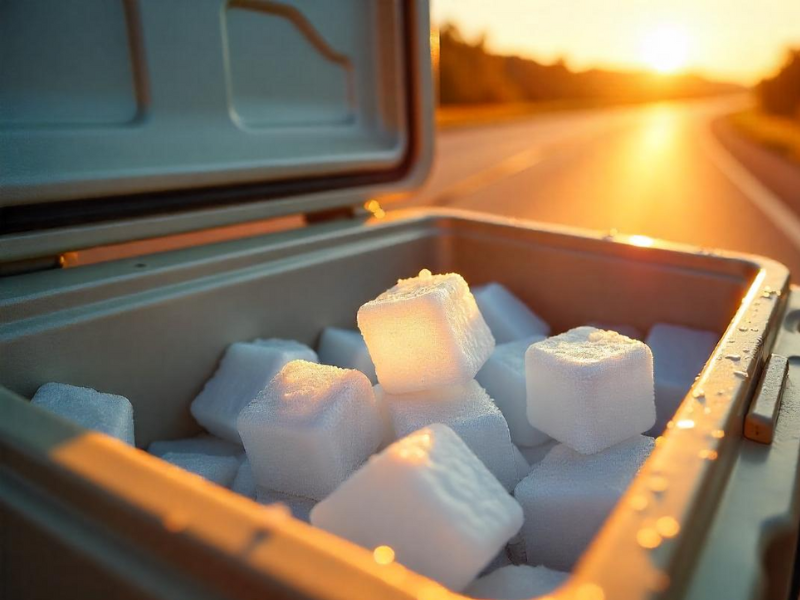
- Pre-Chill: If possible, pre-chill the cooler with regular ice before adding dry ice.
- Layer Wisely: Place dry ice at the bottom, then add frozen items, and finally, perishable food.
- Protection: Wrap dry ice in newspaper or bubble wrap to slow sublimation and sequester the dry ice from direct contact with food you do not want frozen solid.
- Supplemental Dry Ice Supply: Have a separate cooler to store supplemental dry ice that is protected from air and heat. Replenish your stored food coolers as necessary throughout the trip to maintain the correct temperature. By adding dry ice products when needed you can adjust the temperature and keep non-frozen items at non-frozen temperature and your frozen items frozen.
Packing Your Food
- Freezing First: Freeze items like meat, poultry, and dairy before the trip.
- Packaging: Use airtight containers or heavy-duty freezer bags to prevent freezer burn.
- Organization: Label containers for easy identification. Plan what meals or foods you’ll be eating when and layer accordingly.
Using Dry Ice Effectively
- Quantity: The amount of dry ice depends on cooler size, trip duration, and food quantity. To keep items frozen, plan for ½ pound of dry ice per pound of frozen food for every 24 hours, keeping refrigerated foods cold will require less dry ice, but…
- Monitor Temperature: Cooler effectiveness varies by model and condition, so monitor temperatures as you go and….
- Replenish Dry Ice as necessary: Especially if your trip is long, have a plan to replenish dry ice at stops or carry extra dry ice in another cooler.
- Ventilation: Dry ice produces carbon dioxide gas. Ensure adequate ventilation in the car.
Tips for Maximum Coldness
- Cooler Placement: Keep the cooler out of direct sunlight.
- Lid Closure: Keep the cooler lid closed as much as possible.
- Ice Packs: Combine dry ice with regular ice packs for extended cooling.
Safety Precautions
- Never in a Sealed Container: CO2 buildup can cause an explosion. Do not attempt to seal a cooler to preserve cold.
- Proper Disposal: Only dispose of dry ice outdoors in a well-ventilated area.
- Extreme Cold: at -109 F, prolonged contact with exposed skin can cause frostbite. Handle dry ice with gloves
- Ventilation: Remember that dry ice releases CO2 gas as it sublimates so make sure you have adequate ventilation.
By following these guidelines, you can enjoy fresh, cold food throughout your road trip. Happy travels!