Question. Why is it so difficult to get quality dry ice in the Northeast region of the U.S.?
Answer: To answer this question we must understand how the entire dry ice supply chain works – from industrial CO2 production, to centralized dry ice manufacturing, to local storage and distribution, to final delivery to the end user. Decisions made at each step of this process directly affect the quality of dry ice that arrives at a customer’s facility.
Question: Where is the CO2 for dry ice made?
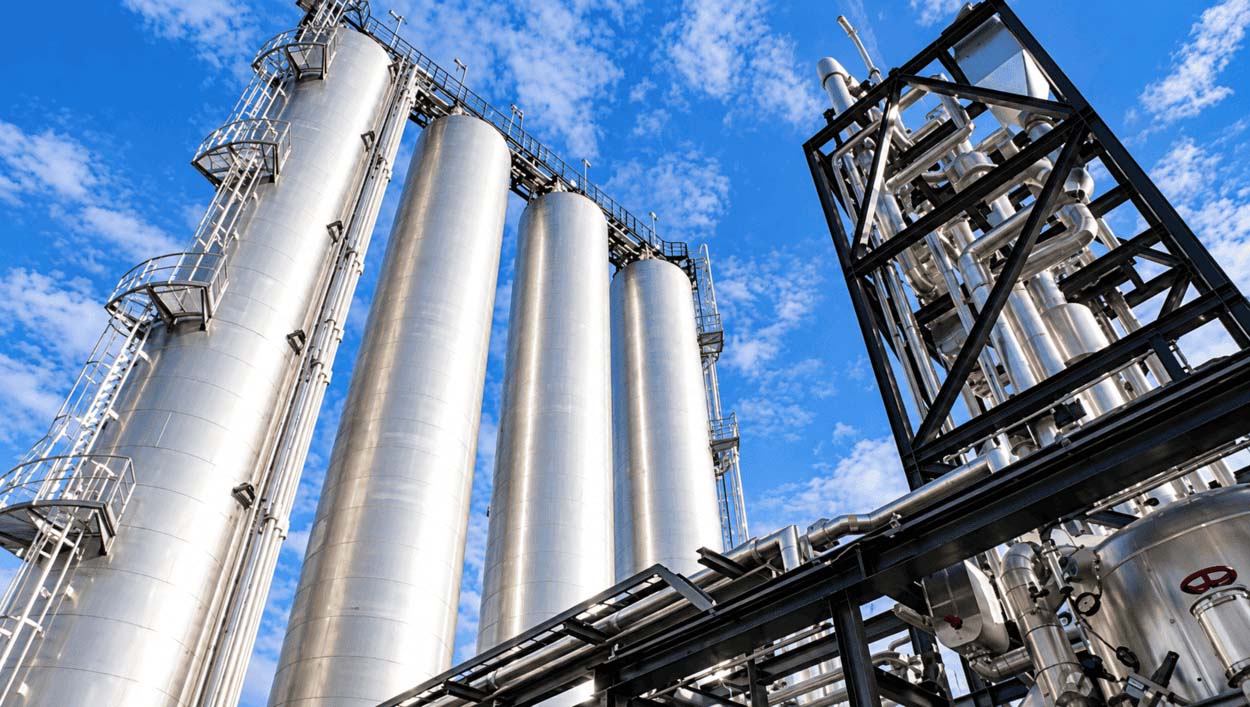
Answer: CO2 is not produced directly for use like other industrial gases such as Nitrogen or Argon. The CO2 feedstock for dry ice is a byproduct of other industrial processes. Ethanol refineries, ammonia/fertilizer plants, hydrogen producers, and chemical manufacturers all generate huge amounts of CO2 when making their products. These plants are concentrated across the Midwest grain belt (for ethanol), the Gulf Coast (for petrochemical and hydrogen producers), and major refining centers around the country. Industrial gas companies locate their dry ice manufacturing next to these CO2 sources. They pipe over the CO2, scrub it and convert it to Liquid CO2 and dry ice. Importantly, there are no significant sources of industrial CO2 in the Northeast United States. This fact means that traditionally, the closest sources of dry ice for customers in the Northeast were either in the Midwest or the Gulf Coast.
| Region | Primary Source Industry | Key Operational Hubs | Major CO2 Providers Present |
| The Midwest (IL, IA, IN, OH) | Corn Ethanol Fermentation & Ammonia | Decatur, IL; Pekin, IL; Lima, OH | Matheson (Continental Carbonic), Linde |
| The Gulf Coast (TX, LA) | Natural Gas Processing & Petrochemicals | Houston Corridor, Corpus Christi | Linde, Messer, Matheson |
| West Coast (CA, WA) | Industrial Manufacturing & Agriculture | Ceres, CA; Keyes, CA; Anacortes, WA | Messer, Matheson |
Question: How is dry ice made from CO2?
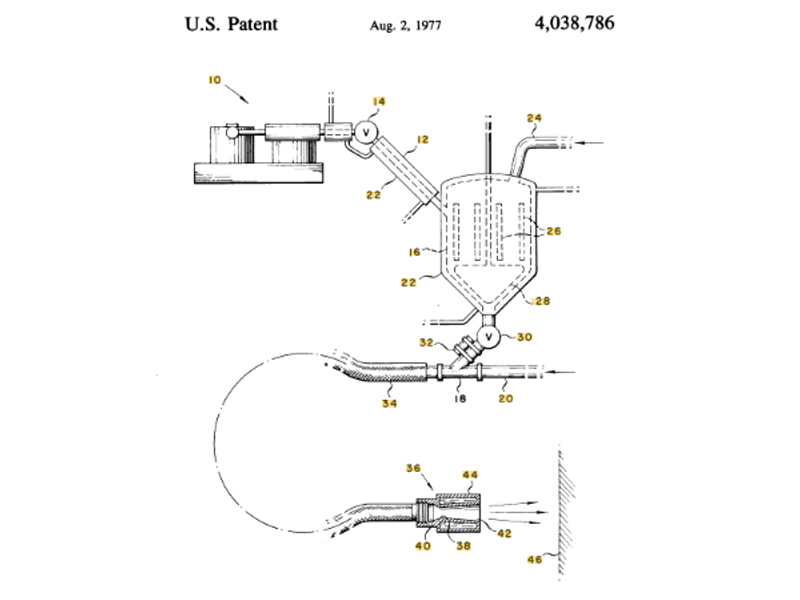
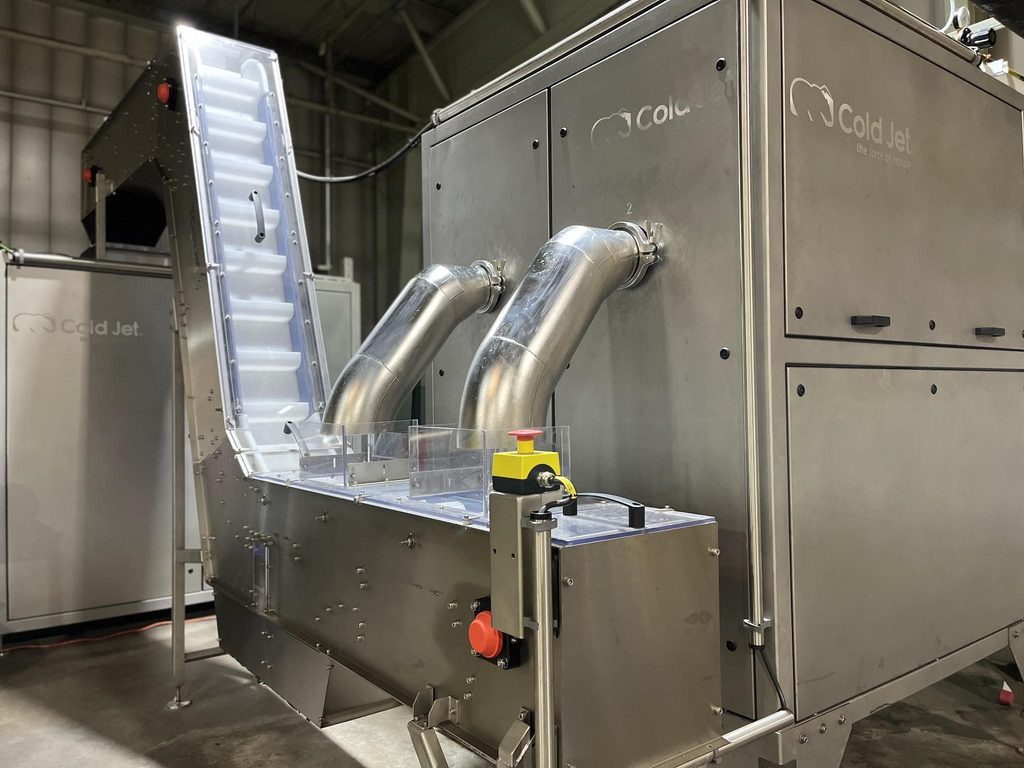
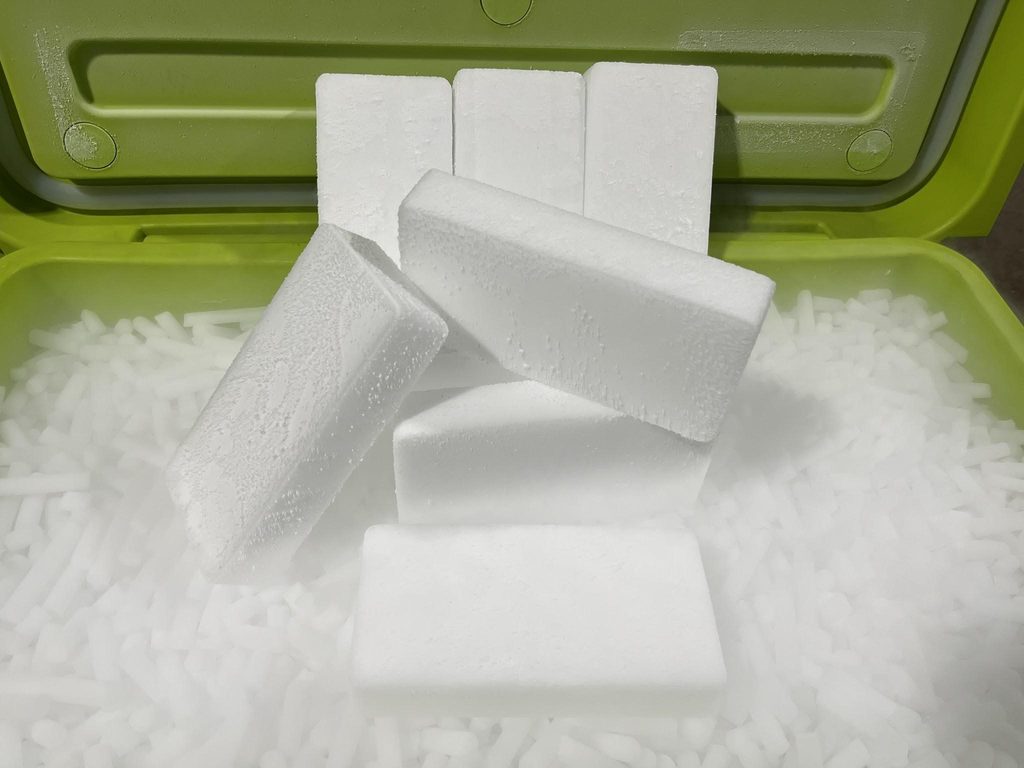
Answer: In a process called liquefaction, CO2 gas is compressed and cooled until it converts to a liquid state (LCO2). LCO2 is then converted to dry ice in a machine called a pelletizer. In the pelletizer, the LCO2 is injected into extruder cylinders where it is no longer subject to intense pressure. The sudden drop in pressure causes it to flash into a freezing, snow-like powder – dry ice. To form the dry ice for use, hydraulic presses squeeze the dry ice “snow” out through dies to form pellets. To manufacture dry ice blocks, pellets are conveyed into a machine called a reformer, where they are pressed into uniform size blocks.
Dry ice is unstable in a solid state and wants to revert back to a gas. Unlike a block of ice from water, dry ice doesn’t melt to a liquid. Instead, it reverts directly back to its gaseous state. This process, called sublimation, begins as soon as the dry ice is formed and continues until it has all evaporated. As dry ice loses mass to sublimation, it loses the qualities it is prized for. This means that from the time the dry ice is made until it reaches a customer, it steadily loses weight and value.
Question: What determines the true price of dry ice?
Answer: Time, Sublimation, Fees. Initially, the nominal price per pound for dry ice made at a CO2 source is cheap. However – the dry ice has yet to reach the customer. On top of the cost of shipping, gas companies add other fees: driver availability fees, hazmat fees and fuel surcharges. These all add to the net cost of the order. The most significant cost does not appear as a line item on an invoice: the cost of dry ice lost to sublimation in transit. This hidden cost begins to accrue as soon as the dry ice is manufactured. Every day in transit the dry ice sublimates, decreasing how much dry ice arrives and degrading its quality. We call this hidden cost The Sublimation Tax
Question: What is the Sublimation Tax?
Answer: When a customer orders dry ice in bulk from an industrial gas company, the dry ice is loaded into totes, weighed, and is scheduled for shipping. The customer pays for the weight of the dry ice as recorded at the time of manufacture. That dry ice starts losing weight, and quality, as soon as it is made. If the gas company’s totes are old, in poor repair, or incorrectly packed, the rate of sublimation is even faster.
The Sublimation Tax is the difference between the cost per pound paid for the initial weight of dry ice, and the true cost per pound when you factor in the actual amount of dry ice delivered. The true cost per pound is determined by dividing the initial cost paid to the gas company by the number of pounds of dry ice remaining after sublimation takes its tax.
Example: a customer pays $500 for 500 pounds of blasting pellets from a dry ice manufacturer on the Gulf Coast; a $1.00 per pound price. The dry ice is manufactured and loaded into an insulated tote on Monday. The tote ships to a local distributor in the Northeast, arriving on Wednesday. The distributor delivers the tote to the customer on Thursday. Due to sublimation, only 400 pounds of dry ice remain in the tote. As a result, the customer has actually paid $500 for 400 pounds of dry ice, yielding a true cost per pound of $1.25. The Sublimation Tax on this purchase is 25%. For every day in transit, the Sublimation Tax grows.
Question: What determines the quality of dry ice?
Answer: There are 4 critical attributes that dictate how the dry ice you purchase will perform the job you require of it. While sublimation is a critical factor in determining dry ice quality and performance, it is not the only variable.
- Freshness: when and where dry ice is manufactured determines how old the ice is when it gets to the customer. Dry ice begins sublimating immediately after it is made. Over time, sublimation reduces the quantity and quality of the dry ice. The dry ice becomes less dense, has less cooling power, and in the case of dry ice blasting pellets, can fuse into impossible-to-use clumps.
- Density: not all dry ice is manufactured the same. Poor plant design, outdated machinery and substandard CO2 can all lower the density of dry ice. Inconsistent pressure and temperature in supply lines leads to excess CO2 gas trapped in the dry ice, lowering density. Sublimation over transit time reduces density as well. Density is a critical factor in dry ice blasting performance. Low density pellets are less explosive and deliver less kinetic force than fresh, high density pellets.
- CO2 Purity: CO2 is processed to different grades of purity. Commercial grade CO2 is less processed (hence cheaper) so it still contains some impurities. Impurities carried in the dry ice can remain on products or equipment after the dry ice has disappeared. CO2 derived from Ethanol production can contain Acetaldehyde which has a distinct odor. Benzene can be present in CO2 derived from Ammonia production. Top Dry Ice uses only the highest purity, food-grade CO2 for all its dry ice.
- Use Life: for customers who purchase dry ice in bulk for use over several days, effective use life is an important property. For example, an ice cream company shipping pints directly to customers gets a shipment of dry ice every Monday to begin their week. That dry ice will have been made the previous week. By the time their last shipments are to be packed with dry ice and shipped on Thursday, that dry ice is already a week old and no longer fit for purpose.
Question: How can I tell the difference between high-quality dry ice and low-quality dry ice?
Answer: The best way to see the difference is a side by side comparison between high quality, fresh dry ice and old, degraded dry ice. To illustrate, here are photos of a competitor’s dry ice blasting pellets next to Top Dry Ice blasting pellets. Due to their small size, 3mm blasting pellets have a high surface area to mass ratio making them especially vulnerable to sublimation. As a result, the difference in quality is easier to see.
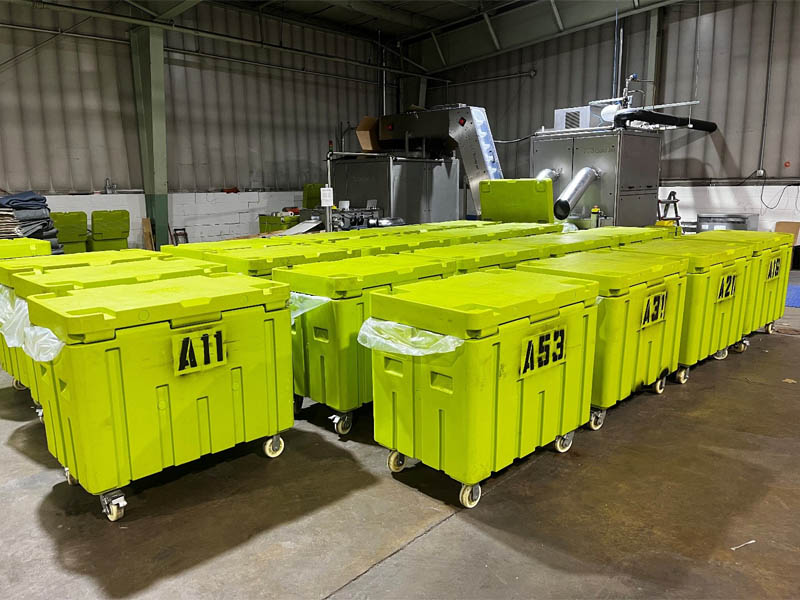
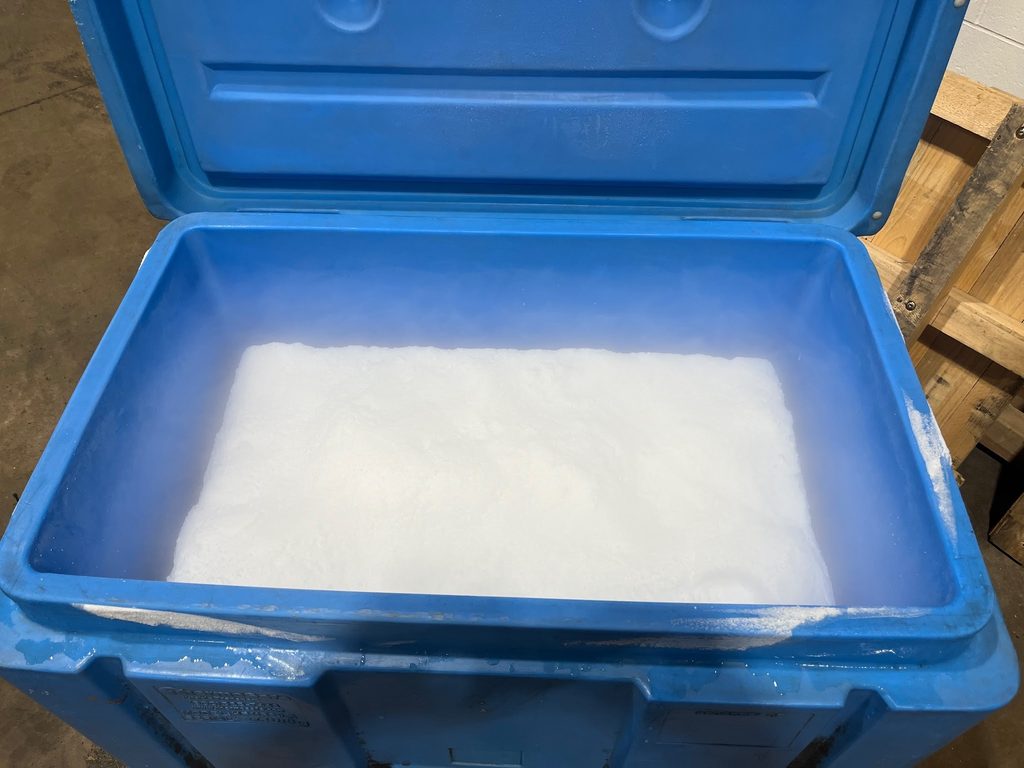
Top Dry Ice Blasting Rice Tote
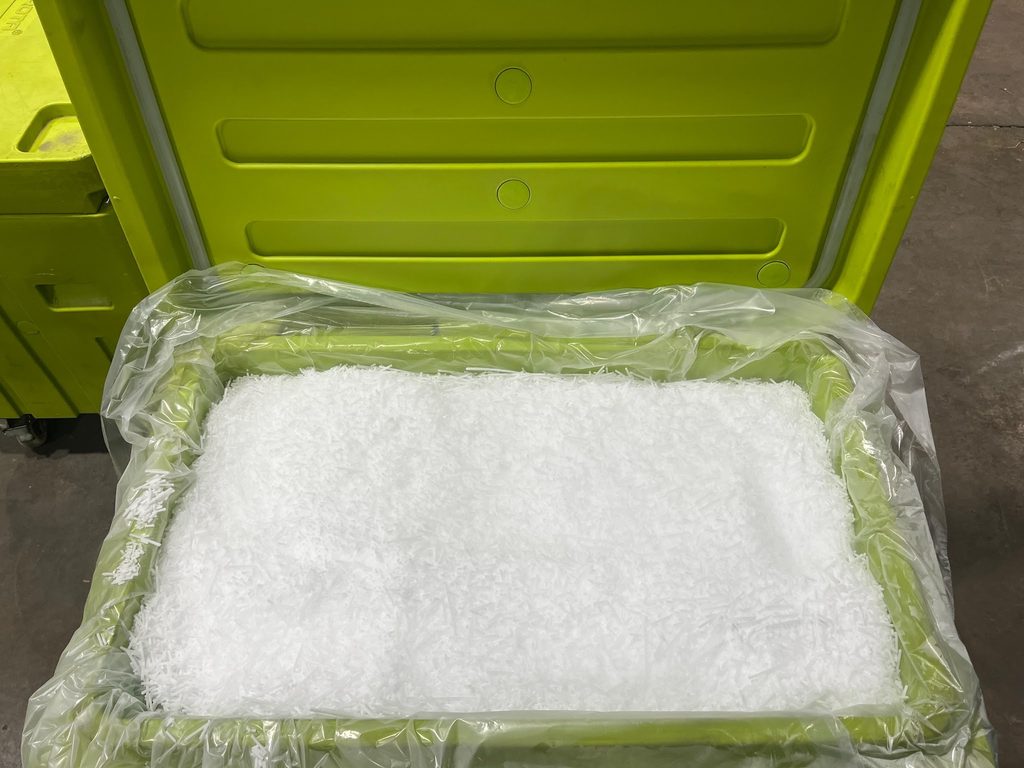
- No Sublimation
- 500 lbs purchased, 500lbs delivered
- Produced locally just in time for delivery
- Pellets flow freely and feed perfectly through dry ice blaster lines
Fresh, Fully-Charged Blasting Rice
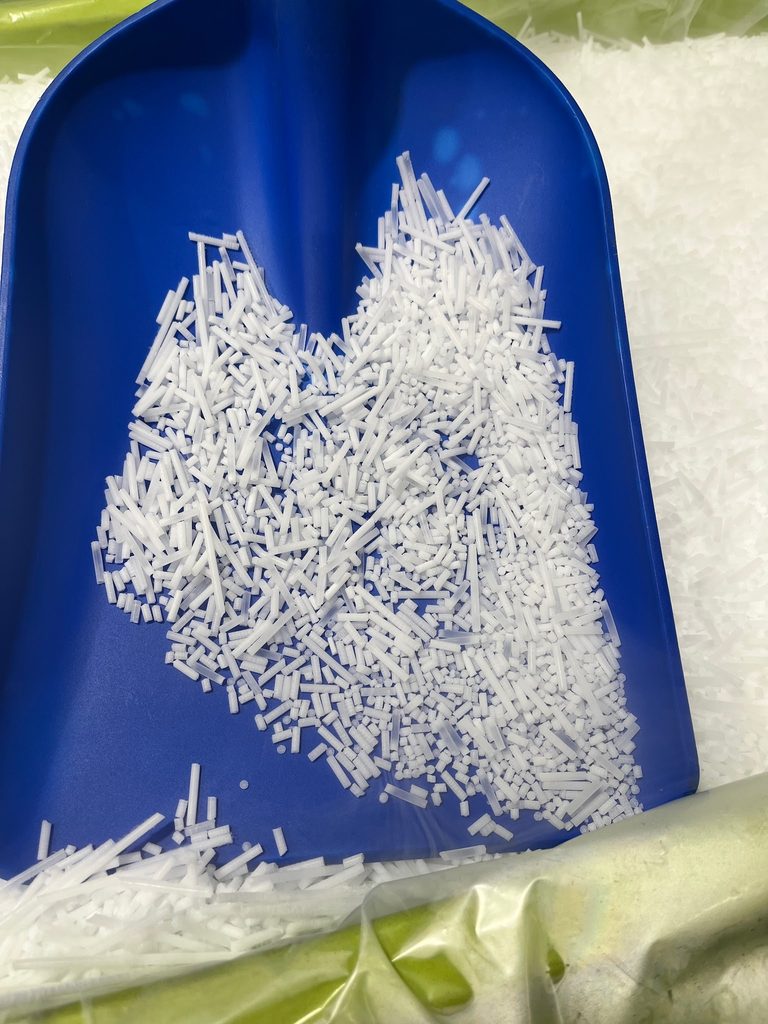
- Most CO2 per pellet: explosive sublimation on impact.
- Highest concentrated cold to freeze and embrittle contaminant
- Heaviest pellets: greater mass = greatest force on impact
- Dry: no clumping, optimized feeding, clear blasting lines
- Most efficient: LESS dry ice used for each cleaning application
Closeup of Fresh Blasting Rice
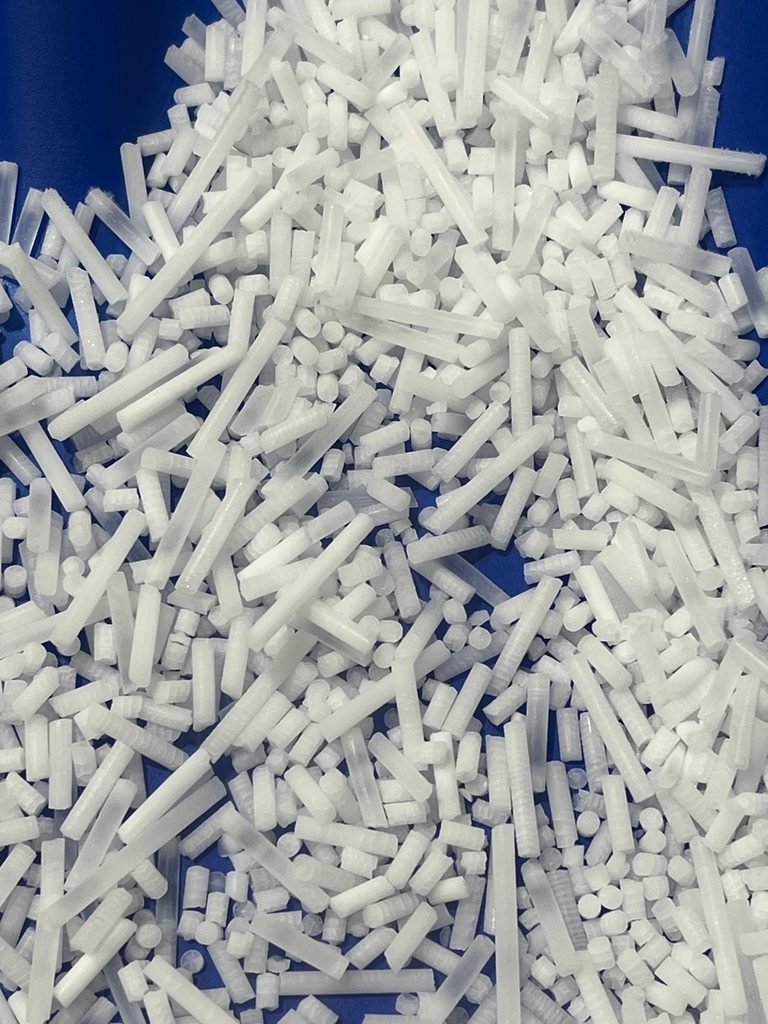
- Dense
- Opaque, milky white
- Perfect pellets with sharp edges
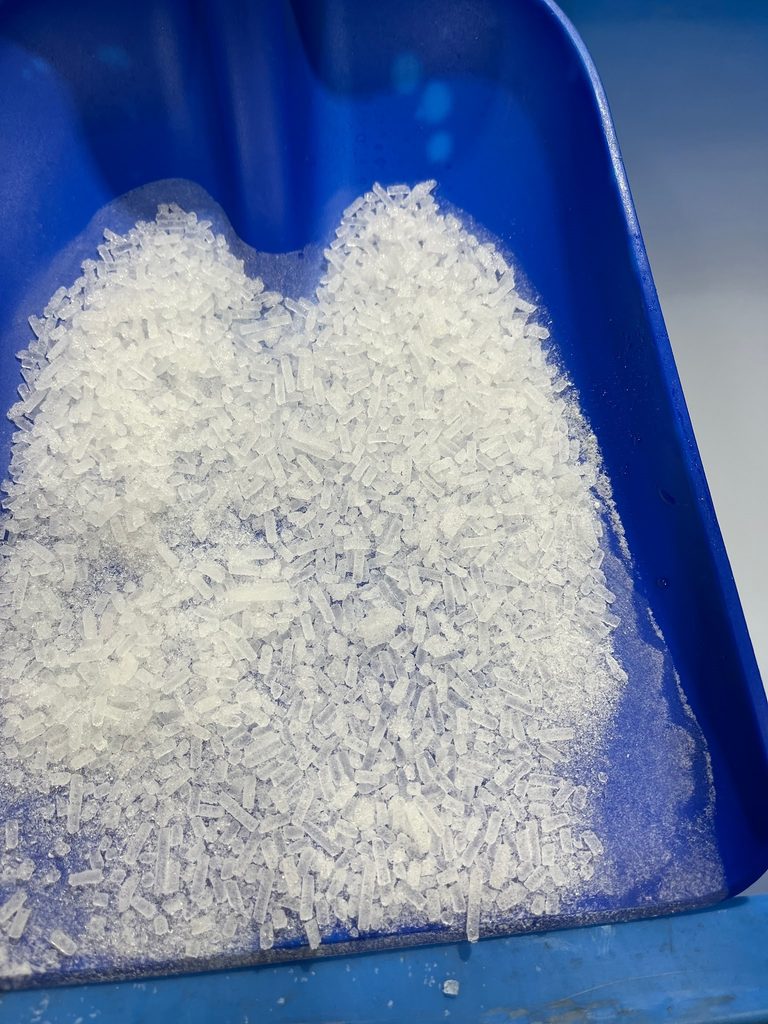
Dry Ice Distributor Blasting Rice Tote
- Sublimated, shrunken from sides
- 500lbs purchased, 400lbs delivered
- Made days before and shipped to local warehouse for distribution
- Can be frozen into a solid block and impossible to use
Old, Degraded Blasting Rice
- Less CO2 per pellet – weak explosion on impact
- Less cold available to freeze and embrittle contaminant
- Light-weight pellets: less mass = less force on impact
- Contains moisture: Clumps in hopper, feeds poorly, freezes in blast lines
- Poor efficiency – MORE dry ice needed for same cleaning effect
Closeup of Degraded Blasting Rice
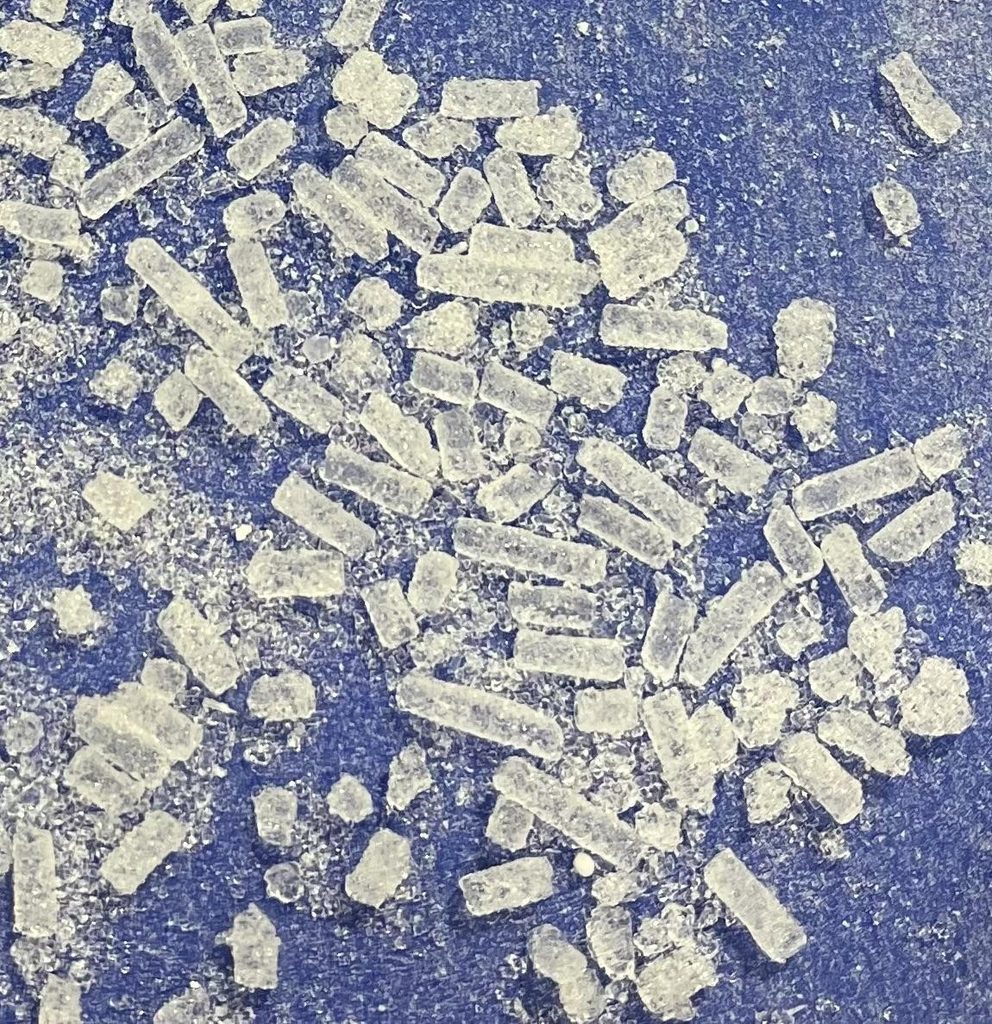
- Light weight
- Translucent
- Decomposed pellets mixed with dry ice dust
Question: How does Top Dry Ice solve the problem of low-quality dry ice?
Answer: The most important step Top Dry Ice took was to build our dry ice plant in the New York Metropolitan Area. By investing here, next to our customers, we eliminated the inefficient supply chain from distant manufacturers to regional warehouses and secondary distributors. By manufacturing dry ice next to our customers instead of next to a cheap source of CO2, we abolished the Sublimation Tax.
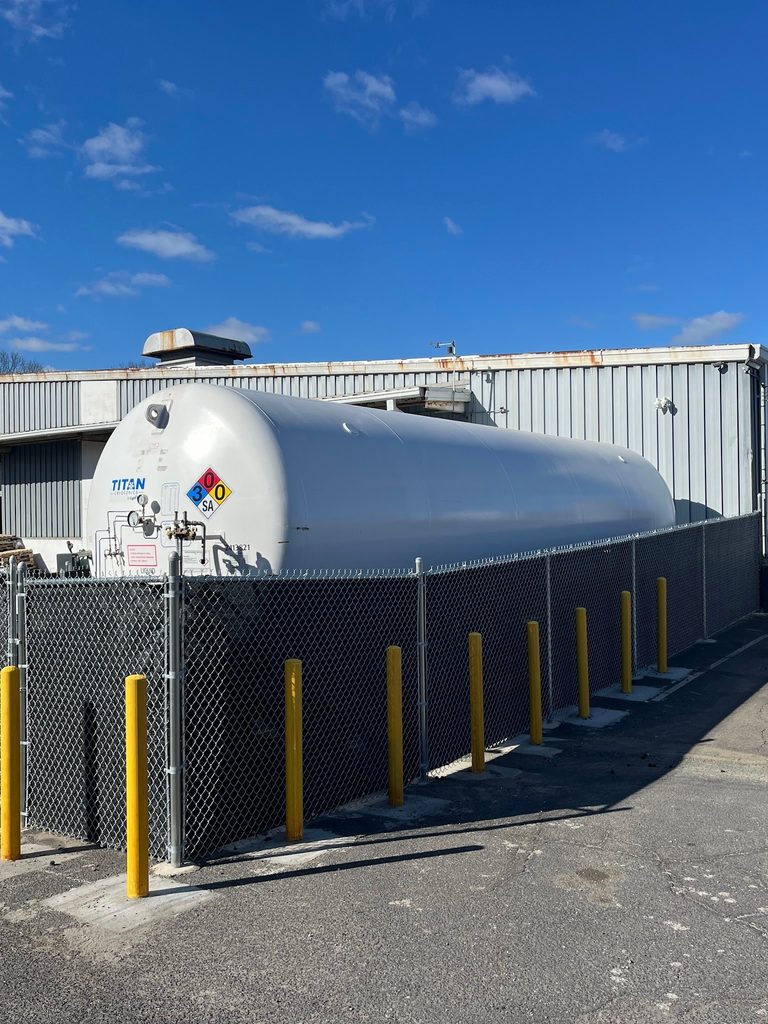
- Local manufacturing: Top Dry Ice is the only manufacturer of dry ice in the New York Metropolitan area. We truck LCO2 to our facility, so our dry ice is made minutes away from our customers, instead of days.
- On-demand production: we further reduce the time from manufacture to use by making our dry ice when the customer orders it, not in advance.
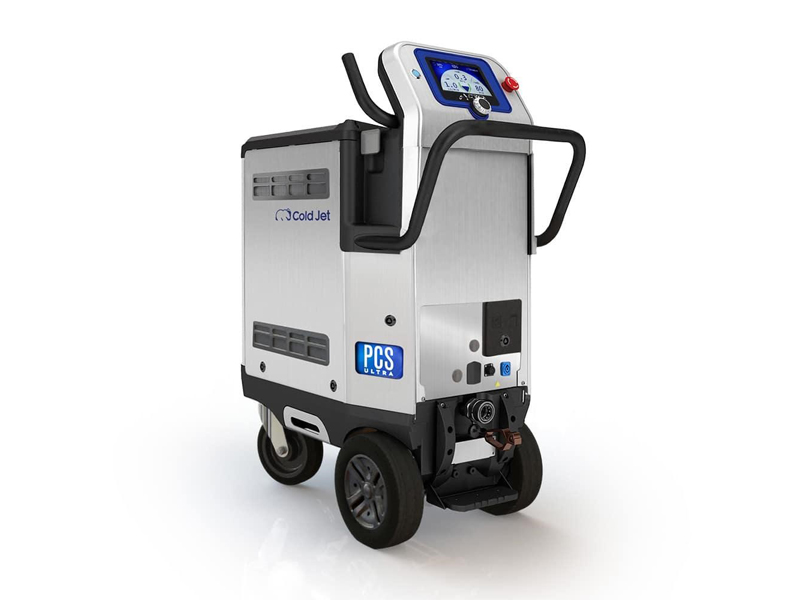
- Engineered plant design: our state-of-the-art Cold Jet PR750 Pelletizer and R1000H Reformer are combined with an optimized LCO2 supply system to produce the densest dry ice possible.
- Top quality CO2: we use only the highest purity, food grade CO2. No residues or odors.